
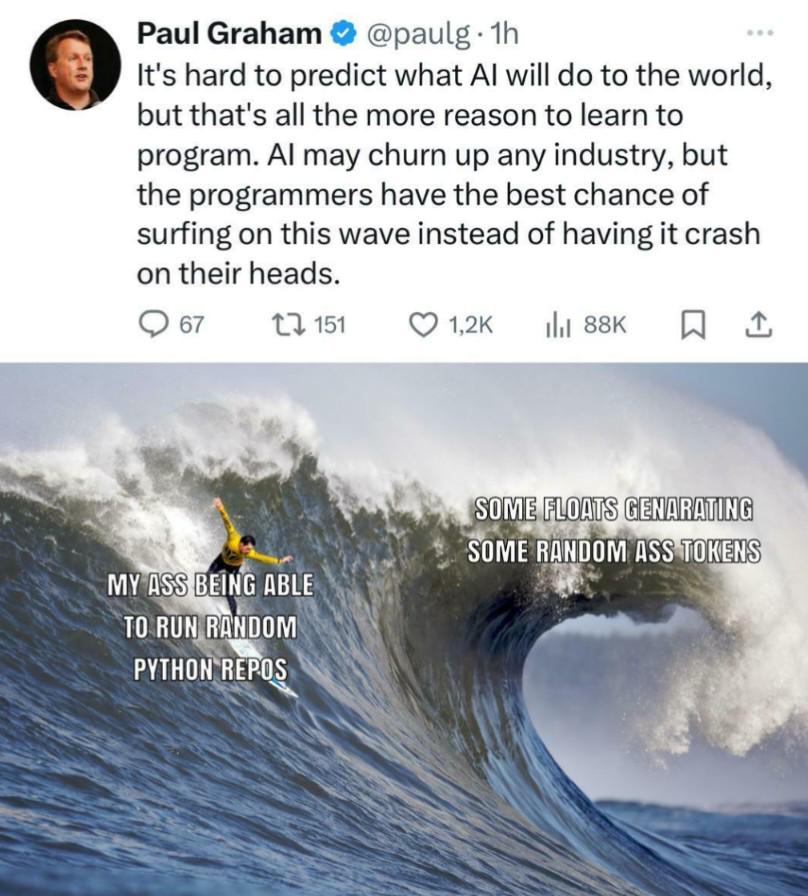
Tech’s Tsunami: Are You Ready to Drown or Surf?
Introduction
Okay, let’s be real. You feel it, I feel it, we all feel it: the ground beneath our feet is shaking. It’s not an earthquake; it’s a tech tsunami, a relentless wave of innovation that’s reshaping industries, careers, and even our daily lives. Are you clinging to the shore, paralyzed by the sheer force of it all? Or are you grabbing a board and getting ready to ride?
This isn’t some futuristic sci-fi scenario; this is happening now. From AI chatbots writing marketing copy to automation replacing routine tasks, the technological landscape is changing faster than ever before. Ignoring it isn’t an option; that’s a guaranteed wipeout.
But don’t panic! This isn’t about becoming a coding guru overnight. It’s about understanding the forces at play, adapting your skills, and positioning yourself to thrive in this new reality. So, let’s dive into the deep end, explore the challenges, and, more importantly, discover how you can not only survive but actually surf this tech tsunami.
The Immediate Impact: Disruption and Displacement
Let’s cut to the chase: the immediate impact of this tech surge is, well, disruptive. Jobs are changing, and some are disappearing altogether. Think about tasks like data entry, repetitive customer service inquiries, and even some aspects of content creation. AI and automation are already taking a significant bite out of these roles.
We’re seeing this play out in real time. For instance, companies are increasingly using AI-powered tools to analyze vast amounts of data, previously the domain of human analysts. While this isn’t necessarily about wholesale layoffs, it’s about changing the nature of the work. Analysts now need to focus on higher-level interpretation, strategic planning, and creative problem-solving – skills that AI can’t (yet) replicate.
Another example is in the customer service sector. Chatbots, powered by sophisticated natural language processing, are handling a growing number of customer inquiries. This frees up human agents to focus on more complex issues, but it also means fewer entry-level customer service jobs.
The short-term impact is undoubtedly unsettling for many. It’s creating a skills gap, forcing individuals to re-evaluate their career paths, and adding pressure to acquire new knowledge.
The Long Game: Transformation and Opportunity
While the immediate impact might seem daunting, the long-term implications of this tech revolution are far more nuanced and, dare I say, exciting. We’re not just talking about job losses; we’re talking about a fundamental transformation of how we work, learn, and interact with the world.
Think about the possibilities. AI and automation can free us from tedious, repetitive tasks, allowing us to focus on more creative, strategic, and fulfilling endeavors. Imagine a world where doctors spend more time with patients and less time on paperwork, where teachers can personalize learning experiences for each student, and where artists can explore new creative avenues with the aid of AI-powered tools.
The rise of remote work, accelerated by the pandemic and enabled by technology, is another prime example of this transformation. It’s given individuals greater flexibility, expanded job opportunities beyond geographical boundaries, and forced companies to rethink traditional work models.
The long game is about opportunity. It’s about leveraging technology to create new industries, new products, and new ways of solving problems. It’s about empowering individuals to be more productive, more creative, and more connected.
Catching the Wave: Practical Solutions for Riding the Tech Tsunami
So, how do you avoid drowning and start surfing? Here are some practical, actionable strategies:
- Embrace Lifelong Learning: This is non-negotiable. The skills you have today might not be relevant tomorrow. Commit to continuous learning, whether through online courses, workshops, conferences, or simply reading industry blogs and articles. Platforms like Coursera, edX, and Udemy offer a wealth of affordable and accessible courses on everything from AI and data science to digital marketing and cybersecurity.
- Example: A marketing professional, seeing the rise of AI-powered content creation tools, could take a course on prompt engineering to learn how to effectively leverage these tools.
- Focus on Human Skills: In a world increasingly dominated by machines, uniquely human skills like critical thinking, creativity, communication, and emotional intelligence become even more valuable. These are the skills that AI struggles to replicate.
- Example: A project manager might focus on developing their leadership and team-building skills to effectively manage cross-functional teams working on complex projects.
- Upskill and Reskill: Identify the skills that are in demand in your industry and actively work to acquire them. This might involve taking a coding bootcamp, learning a new software program, or getting certified in a specific technology.
- Example: A customer service representative could reskill as a technical support specialist, focusing on troubleshooting and resolving technical issues for customers.
- Network, Network, Network: Build relationships with people in your industry and beyond. Attend industry events, join online communities, and connect with people on LinkedIn. Networking can open doors to new opportunities and provide valuable insights into emerging trends.
- Example: A software developer could attend local meetups and conferences to connect with other developers, learn about new technologies, and potentially find new job opportunities.
- Embrace Experimentation: Don’t be afraid to experiment with new technologies and tools. Play around with AI chatbots, try out new software programs, and explore different ways of using technology to improve your productivity and efficiency.
- Example: A small business owner could experiment with different AI-powered marketing tools to see which ones are most effective for reaching their target audience.
- Seek Mentorship: Find someone who is already successfully navigating the tech landscape and ask them to mentor you. A mentor can provide valuable advice, guidance, and support as you navigate your career path.
- Example: A young entrepreneur could seek mentorship from a successful tech entrepreneur to learn about the challenges and opportunities of starting a tech company.
Alternative Approaches: Diversification and Specialization
While the above strategies offer a general framework, consider these alternative approaches to tailor your response to the tech tsunami:
- Diversification: Develop a broad range of skills and knowledge, making yourself adaptable to different roles and industries. This can provide a safety net in case your current job is affected by automation.
- Specialization: Become an expert in a niche area of technology, making yourself highly sought after by employers. This can provide job security and higher earning potential.
- Entrepreneurship: Start your own business, leveraging technology to solve problems and create new value. This can provide greater autonomy and financial rewards, but also requires more risk-taking.
Finding Your Board: Choosing the Right Path for You
The “right” path depends on your individual skills, interests, and goals. There’s no one-size-fits-all solution.
- If you’re passionate about problem-solving and have a knack for numbers: Consider a career in data science or analytics.
- If you’re creative and enjoy communicating with people: Explore opportunities in digital marketing or content creation.
- If you’re technically inclined and enjoy building things: Consider a career in software development or engineering.
The key is to find a path that aligns with your strengths and interests and that offers opportunities for growth and learning.
Don’t Drown, Surf: An Optimistic Conclusion
The tech tsunami is upon us, but it’s not a cause for despair. It’s a call to action. It’s an opportunity to learn, grow, and adapt. By embracing lifelong learning, focusing on human skills, and strategically upskilling, you can not only survive but thrive in this new era.
This is a chance to redefine your career, unlock your potential, and contribute to a future where technology empowers us all. So, grab your board, paddle out, and get ready to ride the wave. The future is waiting. Are you ready to catch it?