
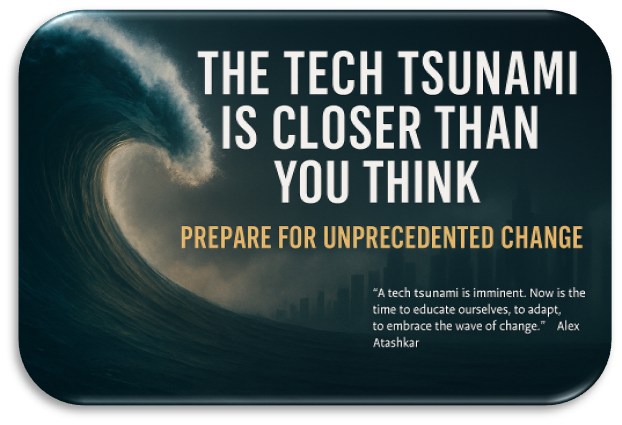
Tech’s Tsunami: Are You Ready to Drown or Surf?
Remember that feeling when dial-up internet was the norm? Waiting… waiting… finally connecting, only to be kicked offline because someone picked up the phone? Seems like a prehistoric memory, doesn’t it? Now, imagine trying to navigate today’s world with that dial-up connection. Impossible, right?
That’s precisely the kind of seismic shift we’re talking about. Technology is no longer just evolving; it’s unleashing a full-blown tsunami of innovation, disrupting industries and redefining the very fabric of how we live and work. The question isn’t whether this wave is coming – it’s already here. The real question is: are you ready to drown or surf?
This isn’t just about shiny new gadgets. This is about fundamental changes impacting everything from job security and career paths to the skills we need to thrive. Ignoring this reality is like standing on the beach, blissfully unaware of the ten-foot wave barreling down on you. So, let’s dive in and explore the short-term shocks, the long-term ripple effects, and, most importantly, how to grab a board and start riding this wave.
The Immediate Impact: Skillsets, Job Markets, and the Great Reshuffle
In the short term, we’re already seeing the tsunami’s immediate impact. Think about the rise of AI. Chatbots are now answering customer service inquiries, algorithms are writing marketing copy, and machine learning models are predicting market trends. This automation is displacing some roles, creating anxiety about job security, and forcing individuals to re-evaluate their skillset.
Look at the “Great Resignation” (or Reshuffle, as some prefer). Many people aren’t just leaving jobs; they’re seeking opportunities that offer more meaning, flexibility, and, crucially, the chance to develop skills that will remain relevant in the face of technological disruption. Companies are struggling to fill roles that require expertise in emerging technologies like cloud computing, data science, and cybersecurity, highlighting a growing skills gap.
This isn’t limited to tech companies, either. Every industry, from healthcare and finance to agriculture and manufacturing, is being transformed by technology. The farmer using drones to monitor crops, the doctor using AI to diagnose diseases, the architect using VR to design buildings – these aren’t futuristic fantasies; they’re happening right now.
Long-Term Ripple Effects: A Society Reimagined
Looking further out, the long-term consequences of this tech tsunami are even more profound. We’re talking about a potential reshaping of society itself.
- The Future of Work: Automation could lead to a shorter work week, a universal basic income, and a greater focus on creative and human-centric roles that are difficult to automate. But it could also exacerbate existing inequalities if access to education and training isn’t democratized.
- Education Revolution: The traditional education system, often criticized for being outdated, will need to evolve to prioritize critical thinking, problem-solving, adaptability, and lifelong learning. Online learning platforms and personalized education will become increasingly important.
- Ethical Considerations: As AI becomes more powerful, we’ll need to grapple with ethical dilemmas around bias in algorithms, data privacy, and the potential for misuse. Clear regulations and ethical guidelines will be crucial to ensure responsible innovation.
- The Metaverse and Virtual Worlds: The metaverse is still in its early stages, but it has the potential to revolutionize how we interact, collaborate, and even work. Understanding its implications, both positive and negative, is crucial for navigating the future.
Catching the Wave: Practical Strategies for Thriving
Okay, enough doomsday scenarios. Let’s talk about solutions. How do you avoid being overwhelmed and start surfing this tech tsunami? Here are several practical approaches you can take:
- Embrace Lifelong Learning: This is no longer optional; it’s essential.
- Identify the skills in demand in your field. Look at job postings, industry reports, and talk to professionals in your network.
- Utilize online learning platforms: Platforms like Coursera, Udemy, edX, and LinkedIn Learning offer courses on a wide range of topics, often taught by leading experts. Many offer certificates upon completion, which can be a valuable addition to your resume.
- Attend workshops and conferences: These events provide opportunities to learn new skills, network with professionals, and stay up-to-date on the latest trends.
- Example: Sarah, a marketing professional, felt her skills were becoming outdated. She enrolled in a digital marketing certification program on Coursera, learned about SEO, social media marketing, and content creation, and landed a new role with a higher salary.
- Become a “T-Shaped” Professional: Develop deep expertise in one area while also acquiring a broad understanding of related fields.
- Focus on developing specialized skills. Choose an area you’re passionate about and become an expert in it.
- Learn complementary skills. For example, if you’re a software developer, learn about project management and user interface design. This will make you a more valuable and versatile asset to any team.
- Example: David, a graphic designer, decided to learn basic coding skills. This allowed him to not only design visually appealing websites but also understand how they function, making him a more effective collaborator with developers.
- Cultivate Adaptability and Resilience: The ability to adapt to change and bounce back from setbacks is crucial in a rapidly evolving world.
- Embrace experimentation and be willing to try new things. Don’t be afraid to step outside your comfort zone and learn new skills.
- Develop a growth mindset. Believe that your abilities can be developed through dedication and hard work.
- Build a strong support network. Surround yourself with people who can offer encouragement and support.
- Example: When her company downsized and her role was eliminated, Maria, a project manager, didn’t give up. She used the time to learn new skills, network with professionals, and eventually landed a new role in a different industry.
- Leverage the Power of Networking: Build relationships with people in your field and beyond.
- Attend industry events and conferences. These events provide opportunities to meet new people, learn about the latest trends, and build relationships.
- Join online communities and forums. These platforms allow you to connect with people who share your interests and learn from their experiences.
- Reach out to people in your network for advice and mentorship. Don’t be afraid to ask for help or guidance.
- Example: Tom, a recent graduate, used LinkedIn to connect with professionals in his field. He attended industry events and networked with people who were working in his dream role. After months of networking, he landed an internship that eventually led to a full-time job.
- Explore Entrepreneurial Opportunities: Consider starting your own business or freelancing.
- Identify a problem that you can solve. What are the unmet needs in your community or industry?
- Develop a unique value proposition. What makes your product or service different from the competition?
- Build a strong online presence. Use social media and other online tools to promote your business.
- Example: Lisa, a stay-at-home mom, identified a need for personalized online tutoring services. She started her own online tutoring business and quickly grew it into a successful venture.
Alternative Approaches: The “Choose Your Own Adventure” Path
The strategies above offer a general roadmap, but the specific path you take will depend on your individual circumstances, skills, and goals. Here are a few alternative approaches to consider:
- The “Specialist” Route: Focus on becoming a world-class expert in a specific niche. This requires deep dedication and continuous learning but can lead to high demand and lucrative opportunities.
- The “Generalist” Route: Develop a broad range of skills and become a versatile problem-solver. This is valuable in dynamic environments where adaptability is key.
- The “Intrapreneur” Route: Innovate within your existing company. Identify opportunities for improvement and propose new solutions to your employer.
The Takeaway: Embrace the Change and Ride the Wave
The tech tsunami is undeniable, and the only way to avoid being overwhelmed is to embrace the change and learn to ride the wave. This means investing in lifelong learning, cultivating adaptability, leveraging the power of networking, and exploring new opportunities.
The future isn’t something that happens to you; it’s something you create. By taking proactive steps to adapt and thrive in this rapidly evolving world, you can not only survive but also flourish. Don’t be afraid to experiment, learn new skills, and embrace the unknown. The possibilities are endless, and the potential rewards are immense.
So, grab your board, paddle out, and get ready to surf! The tech tsunami is here, and the ride is just beginning.